White Paper

Lower BC Hydro demand charges with a commercial battery energy storage system.

Learn how peak shaving with commercial battery energy storage systems (BESS) helps businesses reduce high-demand electricity charges under BC Hydro commercial rates.


Thank you!
You will receive an email with a link to the white paper shortly.
Oops! Something went wrong while submitting the form.
Up to 50%
Peak Demand Savings
Up to 90%
Cost Offset in Year 1
Immediate
Energy Capacity
COPEC company logo with stylized letters and equal sign in the letter E.Tugliq Énergie Co. logo with abstract shapes to the left of the company name.Amazon company logo with a smile-shaped arrow underlining the word.Voyager company logo in uppercase letters.Mercedes-Benz logo consisting of a three-pointed star enclosed in a circle above the brand name.

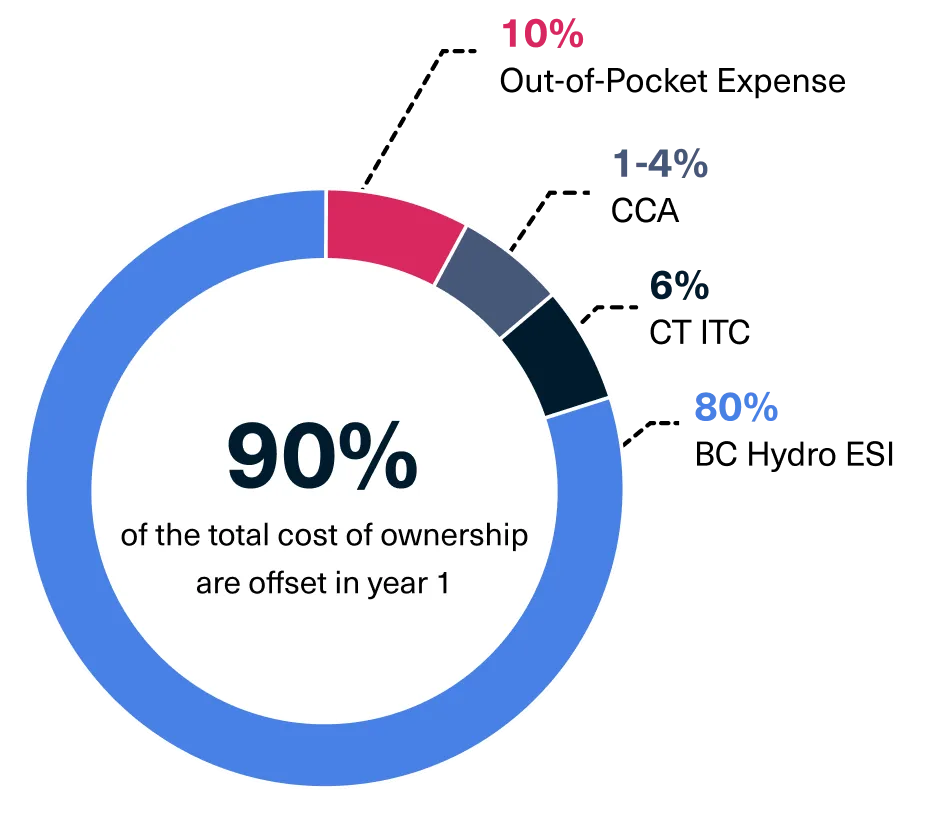
Reduce 90% of BESS Ownership Costs

Lower upfront costs with flexible commercial battery storage and leasing options.
Reduce operating expenses through peak shaving and intelligent energy management.
Offset BC Hydro demand fees caused by grid peak demand charges.
Illustration of BESS project financing and incentives
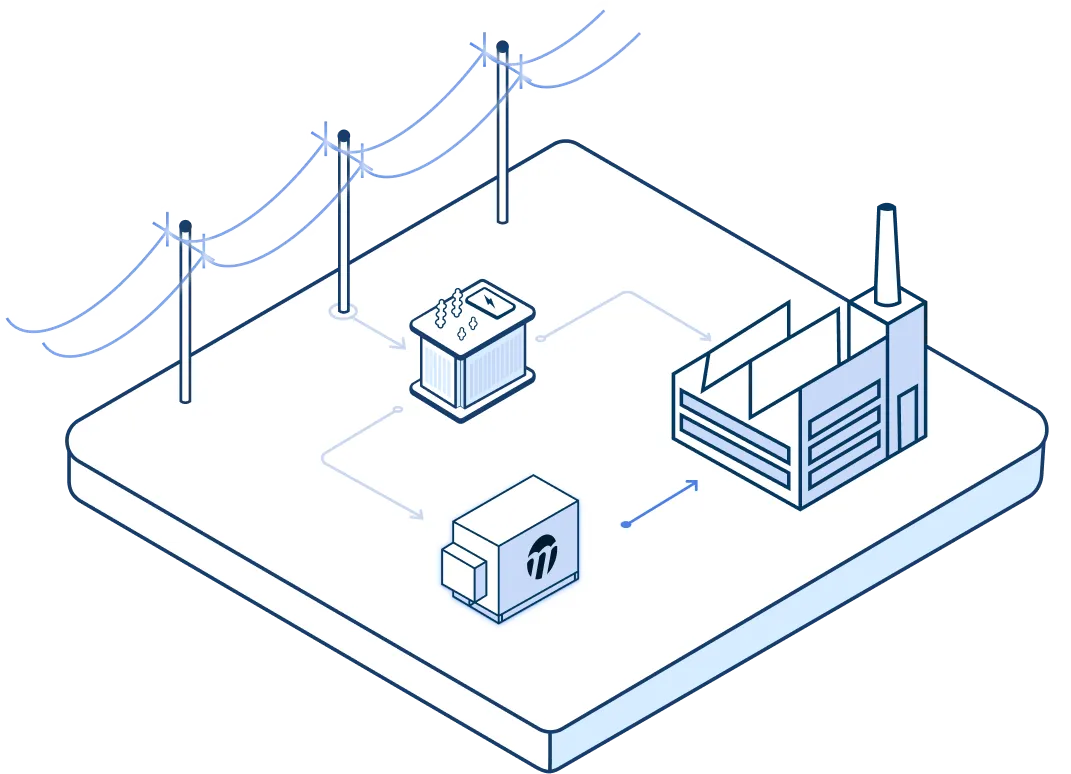
Illustration of a commercial BESS connected to a facility and the grid

Learn How a Commercial BESS Integrates

Seamless integration with existing power infrastructure, backup generators, and microgrid energy storage systems.
Real-time monitoring and control to support electricity peak shaving and reduce high demand electricity charges.
Scalable commercial and industrial energy storage design to meet evolving energy and load requirements.
← All resources
White Paper

Why long-term BESS reliability rests on the battery management system

Why BESS reliability depends on the battery management system, and how Nova’s three layers of safety keep repurposed EV batteries reliable for 20 years.
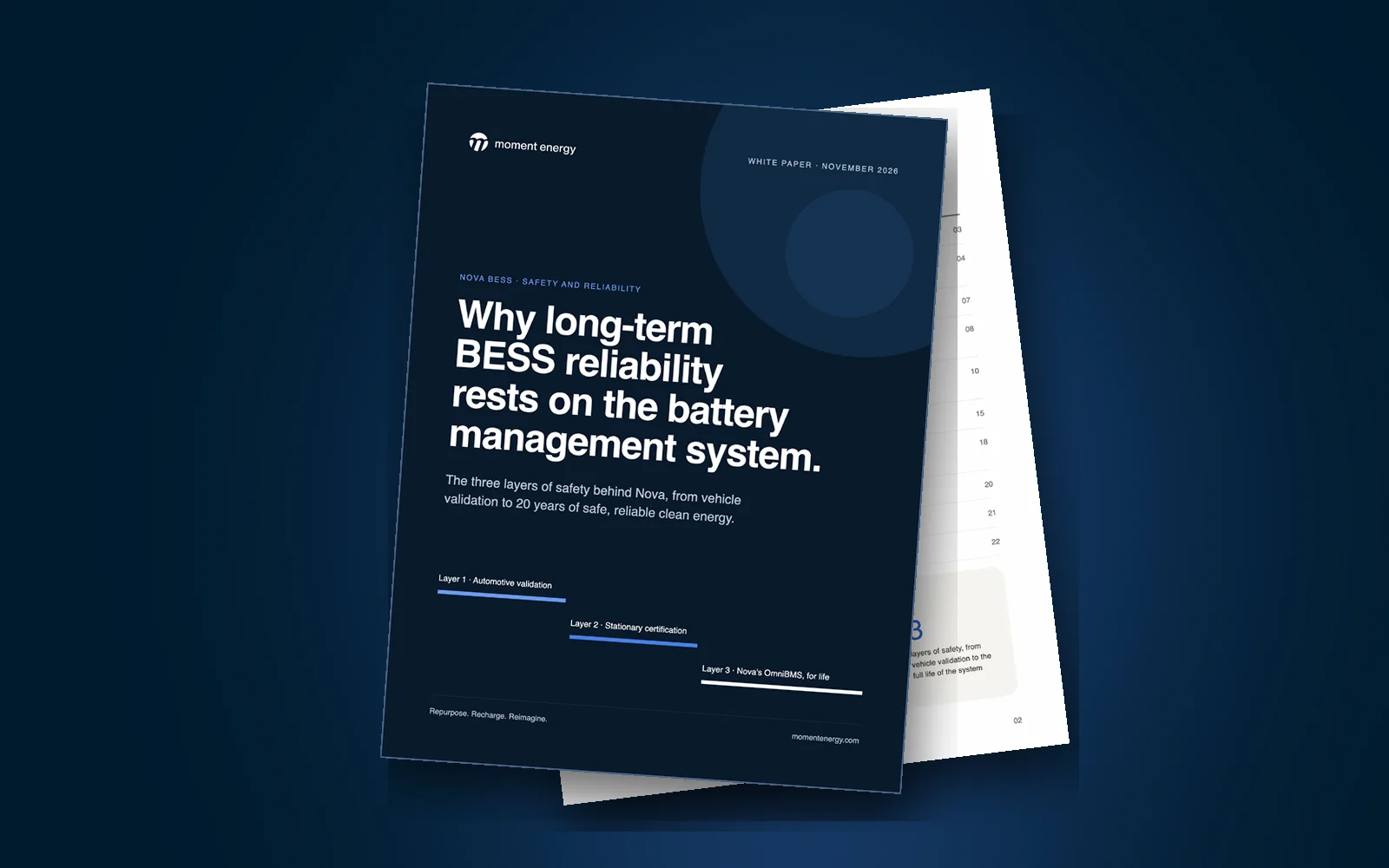
Why long-term BESS reliability rests on the battery management system

Batteries age unevenly. The BMS decides what happens next.

Every battery in a BESS ages at its own pace, shaped by manufacturing variation, its place along the coolant path and the climate it runs in. When batteries are connected in parallel, the system has little control over how they share the load as they age.

What’s inside

  • Where BESS failures start: 65% of root-caused failures trace back to integration and operation
  • The three layers of safety behind Nova: automotive validation, stationary certification and Nova’s OmniBMS
  • How Dynamic Battery Control keeps Nova’s nine batteries within 0.1% state of charge of each other over a full cycle
  • Fault isolation, and swapping a battery on site without pre-balancing
  • What this means for EPCs: insurability, bankability, permitting and commissioning

Download the white paper today.

Fill out the form and we’ll email you the white paper on the three layers of safety behind Nova.

By using this website, you agree to the storing of cookies on your device to enhance site navigation, analyze site usage, and assist in our marketing efforts. View our Privacy Policy for more information.

Privacy Preference Center

We use cookies to enhance your browsing experience, provide essential site functions, and help us understand how you use our site. You can manage your cookie preferences at any time. Blocking some cookies may impact your experience. More information.

Accept All

Manage Consent Preferences

These items are required to enable basic website functionality.

Always active

These items help the website operator understand how its website performs, how visitors interact with the site, and whether there may be technical issues.

Thank you! Your submission has been received!
Oops! Something went wrong while submitting the form.