



.webp)
In today’s business environment, a power outage can lead to substantial financial losses. According to ITIC, 98% of organizations report that a single hour of downtime costs over $150,000.
Whether it’s a grid failure, extreme weather, or infrastructure issues, businesses need a reliable power backup solution for uninterrupted operations and peace of mind.
This guide examines the best power backup options for businesses, including diesel generators, modern battery systems, and solar backup solutions. We’ll also explain how long these systems can last and how to choose the right one for your needs.
Understanding Business Backup Power
A backup power system serves as an emergency power source when the primary energy source fails. The right solution depends on your power demand, typical outage duration, and sustainability goals. Choosing the right system involves balancing reliability, cost, and flexibility to keep your operations running during power failures.
Types of Power Backup Solutions
Businesses have several power backup options, each with unique features. Selecting the right one is crucial for operational continuity.
1. Diesel Backup Generators
Diesel generators deliver reliable, long-duration power essential for critical operations. By providing backup power during outages and primary power to remote sites, they safeguard businesses against costly disruptions. Standby generators are a traditional solution in demanding sectors like healthcare, data centers, manufacturing, and utilities.
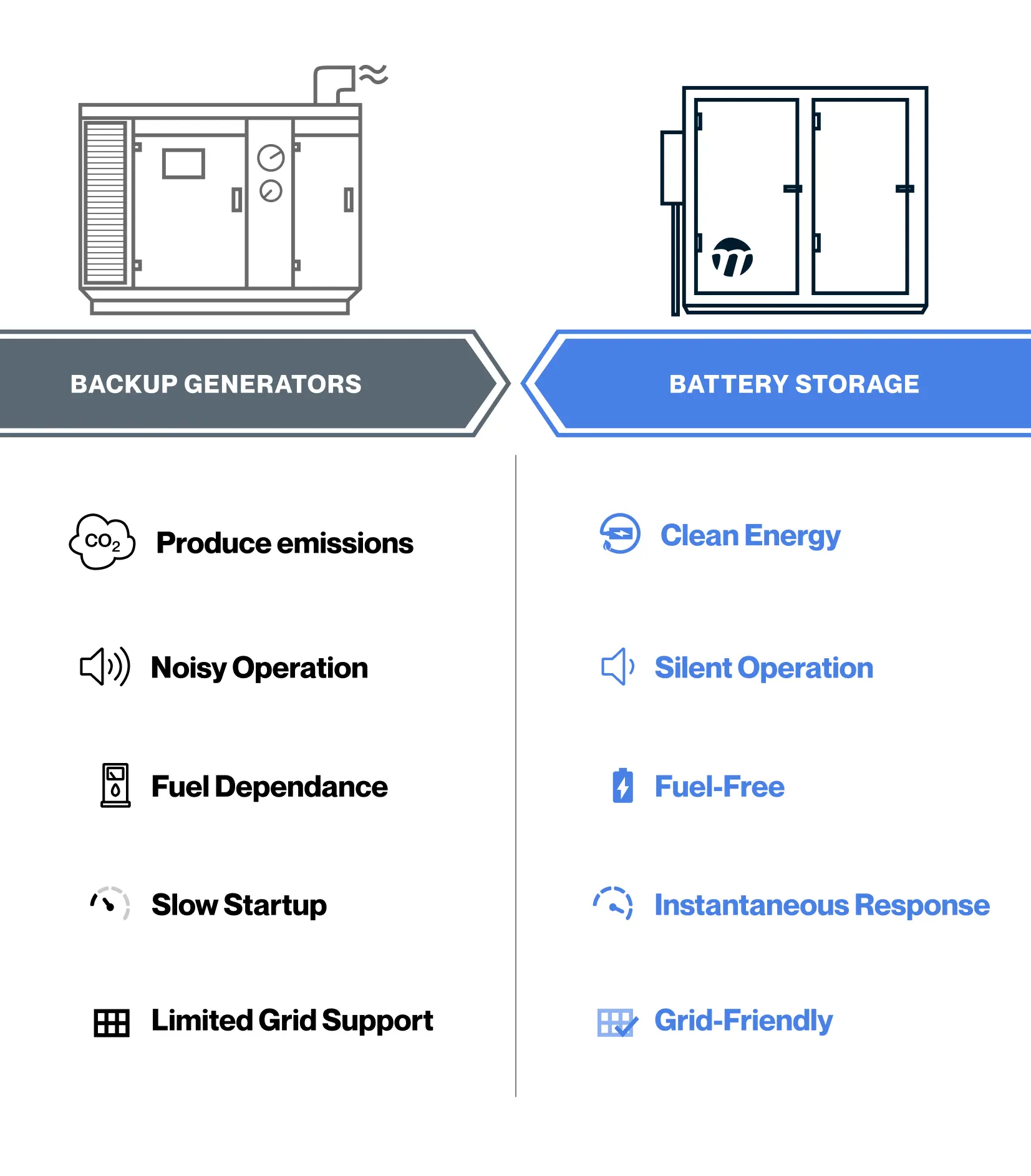
- Pros: Diesel generators have a long-established track record of reliability. With proper maintenance and fuel, they can run for days. Buying a diesel backup power generator is also often cheaper upfront than other options.
- Cons: These generators constantly need fuel, and prices can be volatile. They also create harmful emissions and noise pollution. After an outage, there is a short delay before a generator turns on, which can disrupt critical tasks. They also require frequent and costly maintenance. Without this maintenance, system reliability can decline; generators must be run multiple times a year to ensure they remain operational.
2. Modern and Modular Battery Systems
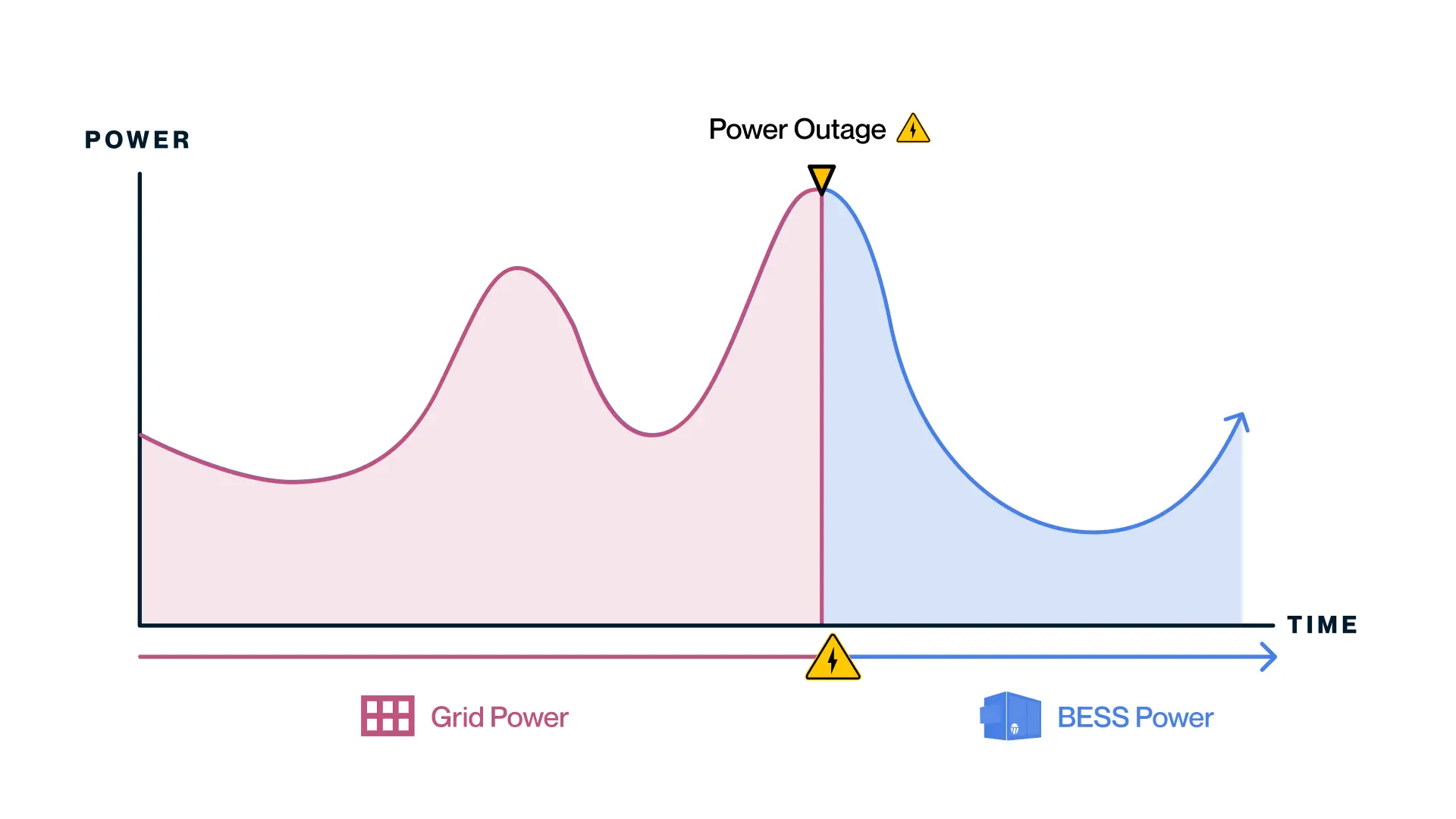
Battery systems are a flexible alternative for backup power. Instead of generating electricity, they store energy from the grid or other sources, providing immediate power when needed. These systems connect easily with renewable energy sources and are simple to install.
- Pros: A BESS delivers immediate power during an outage, ensuring operations continue without interruption. The modular design of systems like Moment Energy's Luna BESS allows for easy scalability as your energy needs grow. BESS can contribute to multiple parts of the value chain in addition to backup; they can reduce energy bills and support numerous site types.
- Cons: A BESS usually costs more upfront than a diesel generator, but you can make up for this with lower running costs and incentives like the BC Hydro Energy Storage Incentive. For a long outage, you may need a way to recharge it, like with solar panels or a generator.
3. Solar Backup Solutions
A solar backup system is a green and efficient option to generate clean power. While the initial investment is high, long-term savings can be significant.
- Pros: This backup system reduces your reliance on the grid and protects you from volatile energy prices. A solar system with battery storage provides a steady supply of clean, stored electricity.
- Cons: The effectiveness of solar panels depends on the weather. Consecutive cloudy days can reduce energy generation. This is also typically the most expensive option upfront and requires significant space.
How Long Can Backup Power Supplies Last?
The duration of the backup power supply depends on the system.
Generators can power a facility for as long as their fuel lasts. Battery systems deliver instant power but typically for shorter periods (ranging from 2 to 8 hours), depending on their size and your energy usage. Solar backup systems can run as long as there is sunlight to recharge the attached battery.
Should I Back Up on Battery Power?
As businesses prioritize clean and dependable energy, battery backup power systems are gaining traction.
Advantages of Battery Systems:
- Clean Energy Storage: Unlike generators, battery systems produce zero emissions during operation.
- Quiet Operation: These systems run silently, making them a quiet, immediate, and clean alternative to a backup power generator. God's Pocket Eco-Lodge is an excellent case study for this application.
- Renewable Integration: Battery systems integrate seamlessly with renewable sources, such as solar and wind.
- Scalable: You can customize battery systems to meet your energy needs and easily expand them later.
For businesses considering battery power, Moment Energy's Luna BESS is a well-suited solution for commercial and industrial environments. Engineered with a strong emphasis on both reliability and sustainability, its design prioritizes long-term operational efficiency and offers a dependable power source to maintain essential operations during grid outages.
This includes ensuring the continuous operation of critical infrastructure, such as lighting, security systems, refrigeration units, and IT networks, in office buildings, retail spaces, and data centers.
.webp)
Financial Incentives and the Future of Backup Power
Investing in backup power is more affordable thanks to financial incentives. Governments and utilities often provide rebates and tax credits, reducing setup costs. In British Columbia, available programs can finance over 80% of your battery energy storage project.
The future for backup power is promising, as AI and IoT improve system efficiency and energy management. Lithium-ion batteries continue to evolve, driving down energy costs and making clean power more accessible.
Ultimately, investing in the right backup power system is a critical step toward building a resilient business that is protected from productivity losses and the significant financial impact of downtime.
Sources
Battery Storage vs. Generator, What’s Best for You? | Briggs & Stratton. (2022). Briggsandstratton.com. https://energy.briggsandstratton.com/na/en_us/resources/article-categories/resource-articles/battery-storage-vs-generator-article.html
ITIC. (2020). ITIC 2020 Global Server Hardware Server Reliability Report. In IBM. ITIC. https://www.ibm.com/downloads/cas/DV0XZV6R#page=5
Marqusee, J., & Jenket, D. (2020). Reliability of emergency and standby diesel generators: Impact on energy resiliency solutions. Applied Energy, 268, 114918. Science Direct. https://doi.org/10.1016/j.apenergy.2020.114918



