



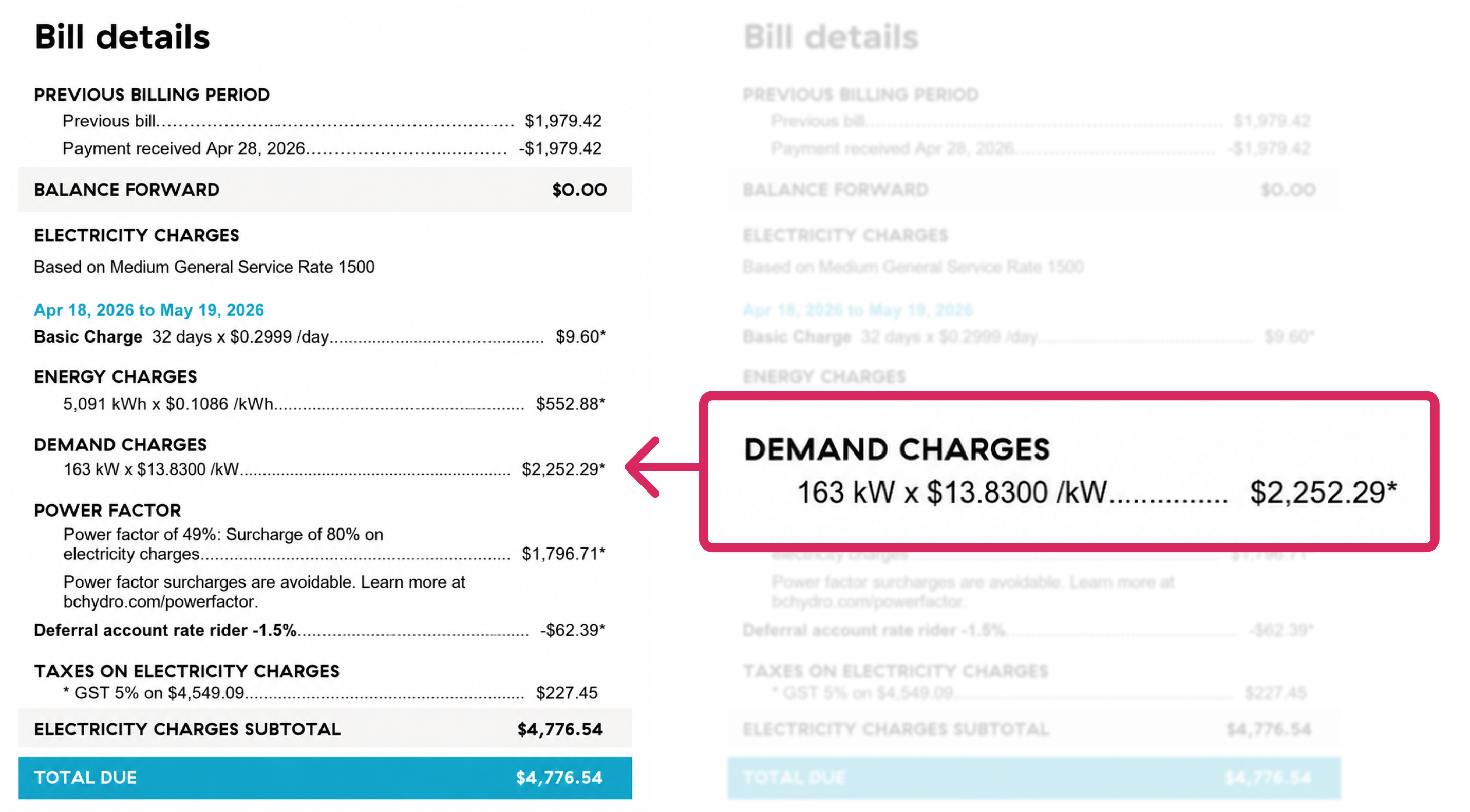
Peak demand charges are silently consuming 30–70% of British Columbia manufacturers' electricity bills. Here's how commercial battery storage in Canada, paired with BC Hydro's ESI program, changes the equation entirely.
Your energy bill has a hidden cost center.
Most facility managers track their energy costs the obvious way: kilowatt-hours consumed each month. But for industrial customers on BC Hydro's large general service rate, that's not where the biggest charges are hiding.
The real culprit is the peak demand charge, and it can be one of the most expensive line items on your entire utility bill.
What are peak demand charges?
Unlike consumption charges, which measure total energy used, demand charges come from your highest 15-minute power use. One brief production surge, one heavy equipment startup at the wrong moment, and that spike sets your demand charge for the next 30 days.
For BC industrial plants, this charge routinely represents 30–70% of the total monthly bill. BC Hydro charges this to cover the cost of reserving enough grid capacity.
This ensures the grid can meet your highest demand at any time. You can't sell that reserved capacity elsewhere, so your facility pays the cost directly.
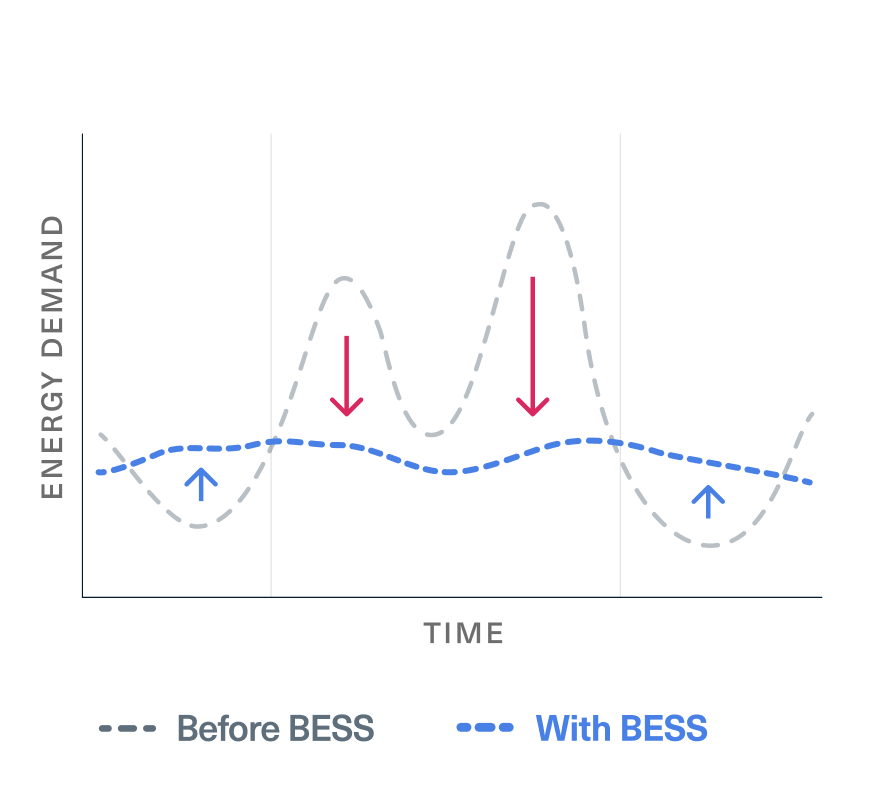
A facility has a peak demand of 400 kW. It pays $6,000 per month in demand charges. It could install a Moment Energy battery energy storage system.
You could size the system to reduce the peak to 200 kW. This would cut the demand charge by about half. That's $3,000/month saved, or $36,000 annually, on demand charges alone.
What is a battery energy storage system?
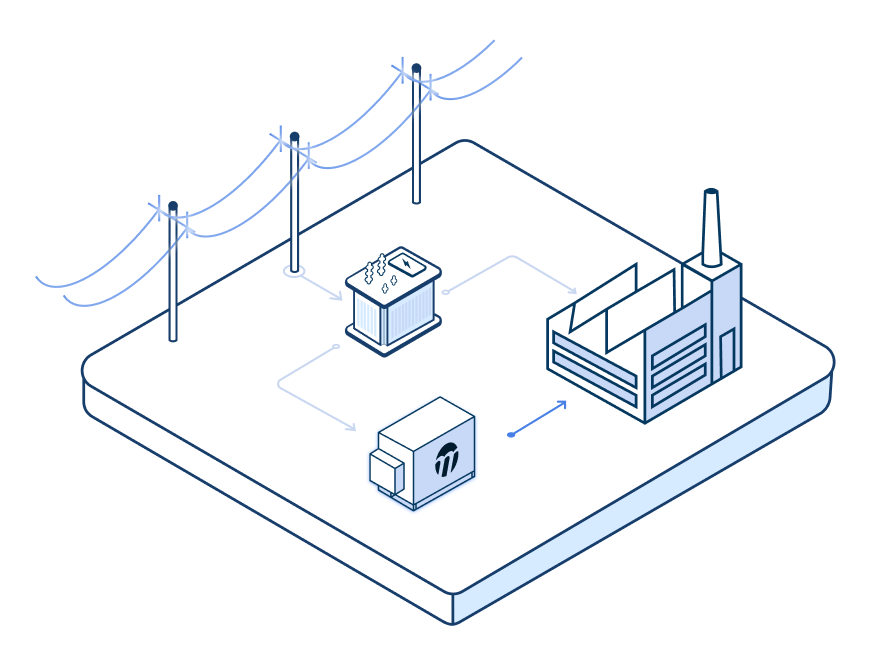
A battery energy storage system (BESS) is exactly what it sounds like: a large battery that stores electricity from the grid (or from on-site generation like solar) and releases it when needed.
It releases that power when your facility needs it most. Think of it as a buffer between your operation and the grid, offering demand charge management.
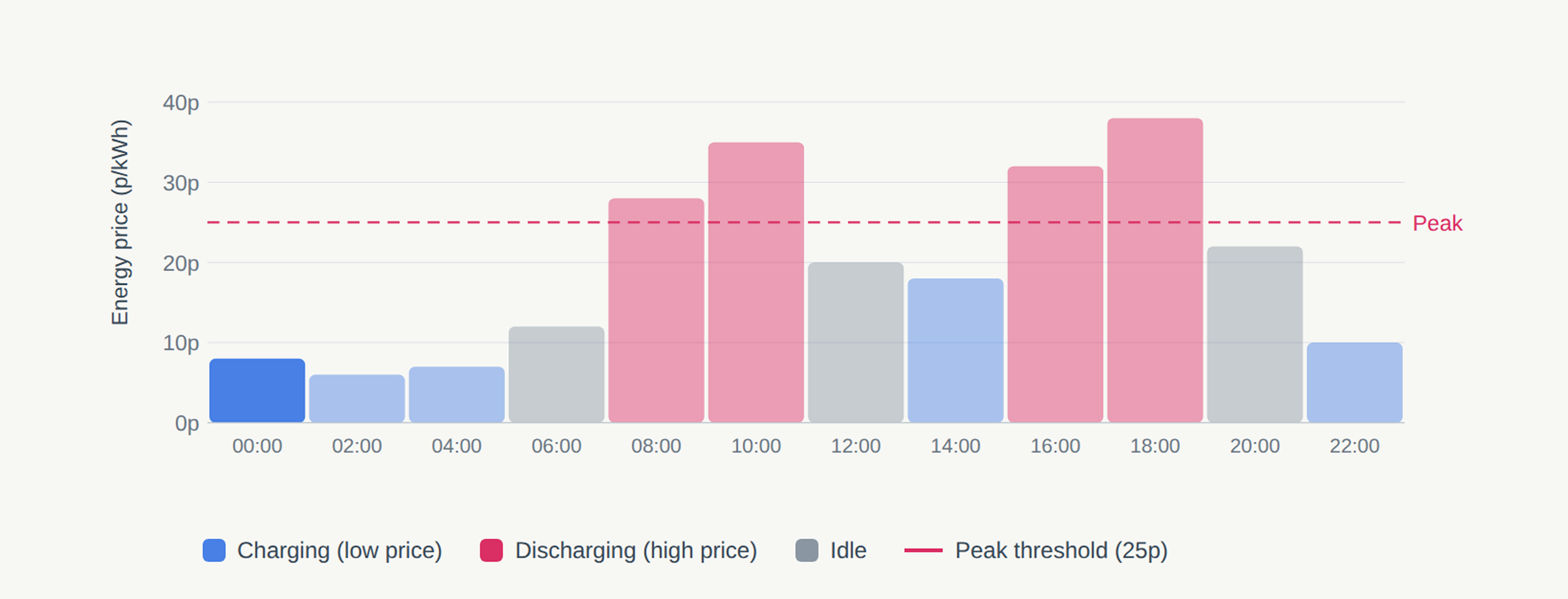
01 · CHARGING
During off-peak hours, the battery charges from the grid at standard consumption rates.
02 · MONITORING
The system watches your facility's real-time power draw, expecting spikes before they register.
03 · DISCHARGING
When the system detects a demand spike, it releases stored energy. This shaves the peak before the meter records it.
BONUS BENEFIT
Backup power, built in. If the grid goes down, the BESS switches to backup mode automatically. It keeps critical equipment running. It helps protect your operation from costly downtime and production loss.
BC incentives transform the business case.
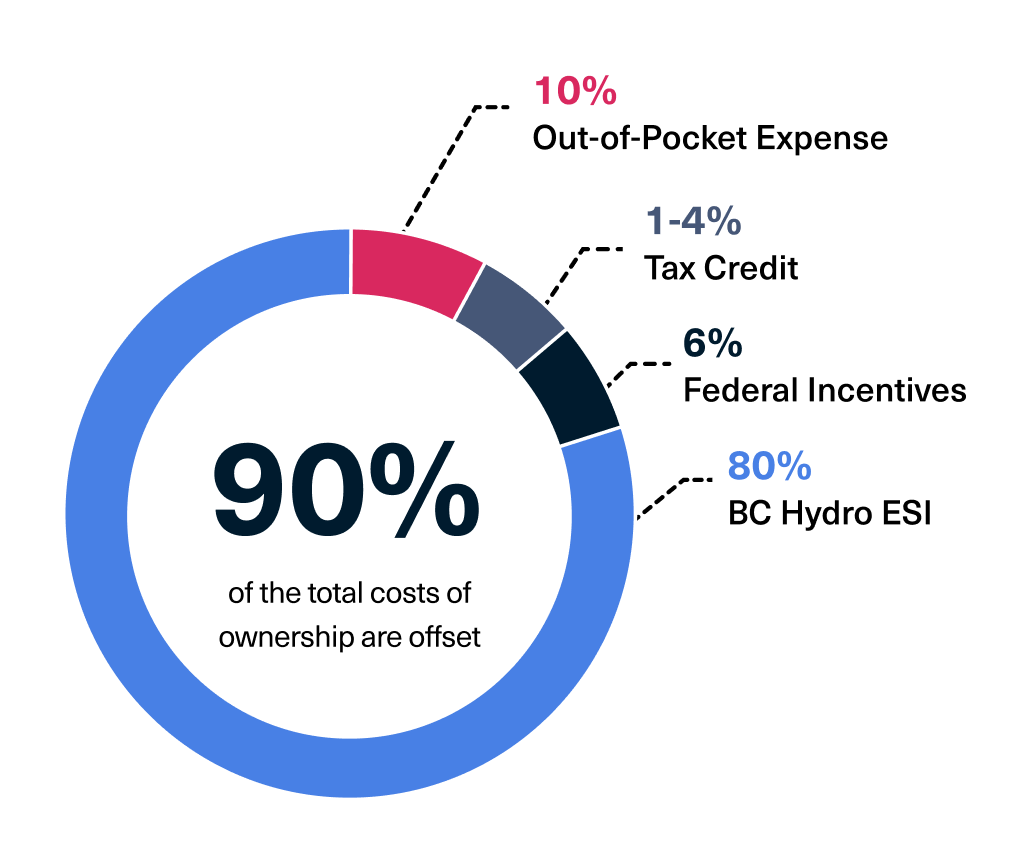
The economics of battery storage in Canada have shifted dramatically for BC manufacturers. Two incentive programs can overlap and cover most of your project cost. This can make the upfront cost of buying a BESS in Canada much lower, resulting in an improved battery storage ROI.
BC Hydro's Energy Storage Incentive (ESI) Program
BC Hydro is currently offering substantial capital incentives to industrial customers in grid-constrained areas. The program can cover up to 80% of eligible project costs for a qualifying BC Hydro battery storage installation.
In return, BC Hydro gets limited access to part of the battery’s capacity during rare demand response events. These events usually last only a few hours each year.
Outside those events, the system works for your facility. It supports peak shaving in BC. It also provides backup power and long-term energy resilience.
Moment Energy's Luna BESS is a listed BC Hydro ESI battery product. This means it qualifies for the program without extra approvals.
Real results from a BC facility.
Case Study: Lower Mainland Glass Manufacturer
A glass manufacturer in BC's Lower Mainland was paying approximately $6,000 per month in demand charges, driven by load spikes reaching 600 kW above a 200 kW baseline.
A Battery Energy Storage System (BESS) was installed to reduce peak demand and lower utility costs.
Project Economics
BESS Cost: $450,000
BC Hydro ESI Incentive: $360,000
Customer Investment: $90,000
Results
Annual savings: $33,535
Payback period: 3.35 years
This project demonstrates how BC Hydro's ESI program can significantly reduce upfront costs and improve the business case for battery energy storage.



